
Basic Techniques
These are the fundamental light sword techniques. Learn them first before moving to more advanced movements. Practice them alone first, then with a partner.
Holding a Light Sword
A light sword is a one-and-a-half-handed weapon. Hold it in your dominant hand and use your off-hand as needed. Grip the handle in the upper third with your dominant hand. Place your off-hand on the lower third to support the weapon when needed.
Guards
Guards are ready positions from which you move into attack or defense.
Standard Guard
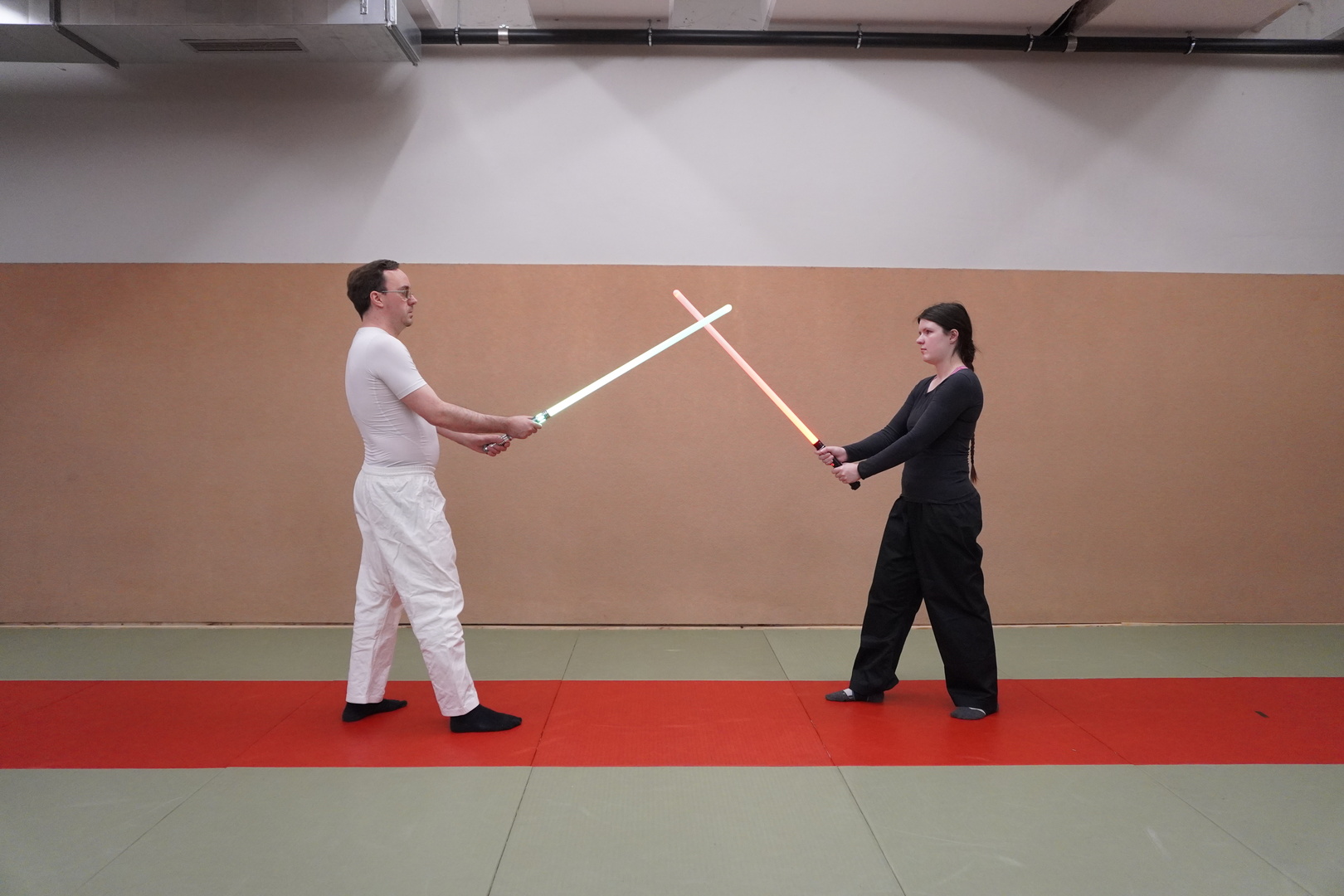
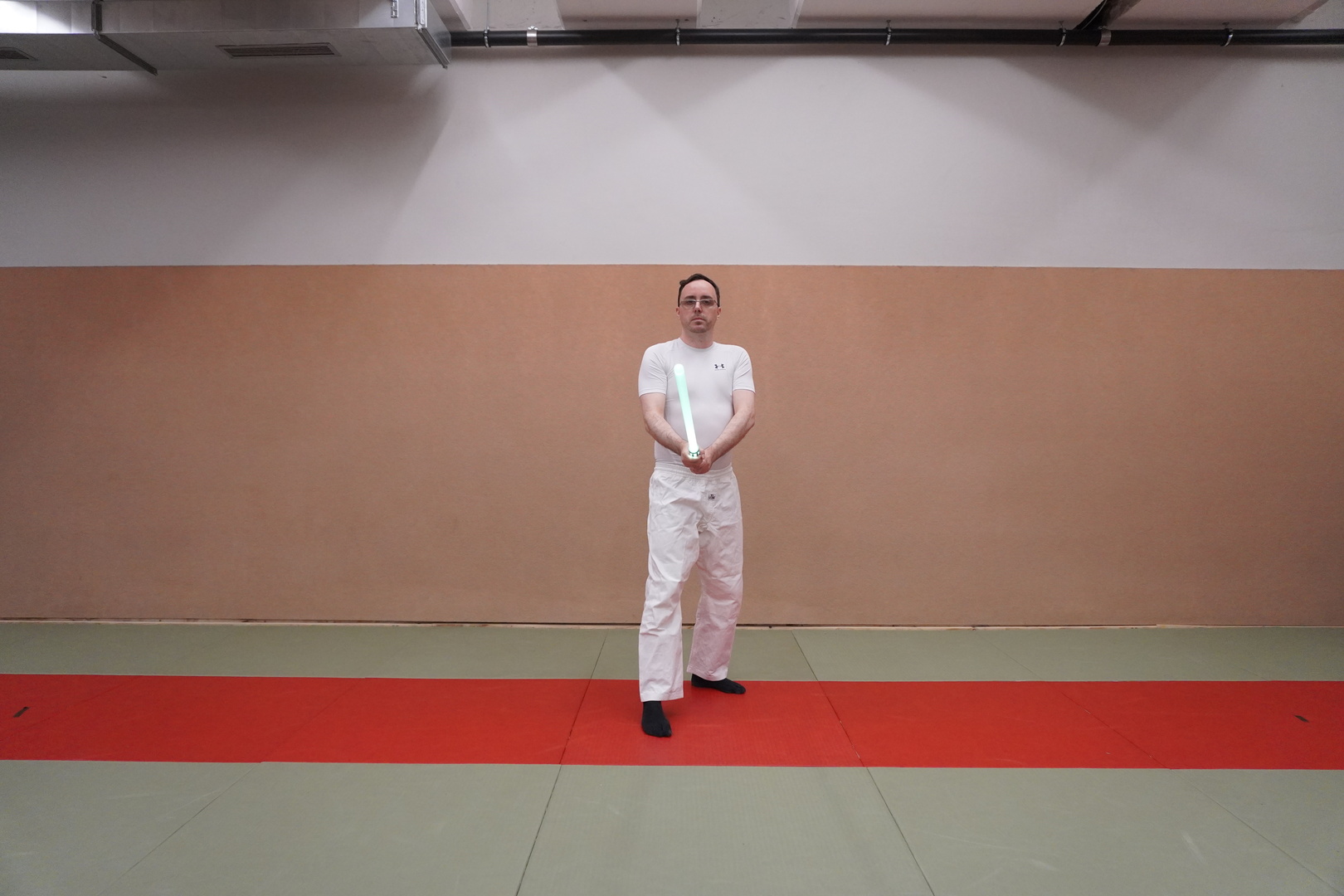
This is your primary ready position. Hold your light sword in front of you. Place the foot on the side of your dominant hand forward and lower the blade toward your opponent at roughly a 45-degree angle. Turn the rear foot about 90 degrees outward and bend your knees slightly.
Upright Guard
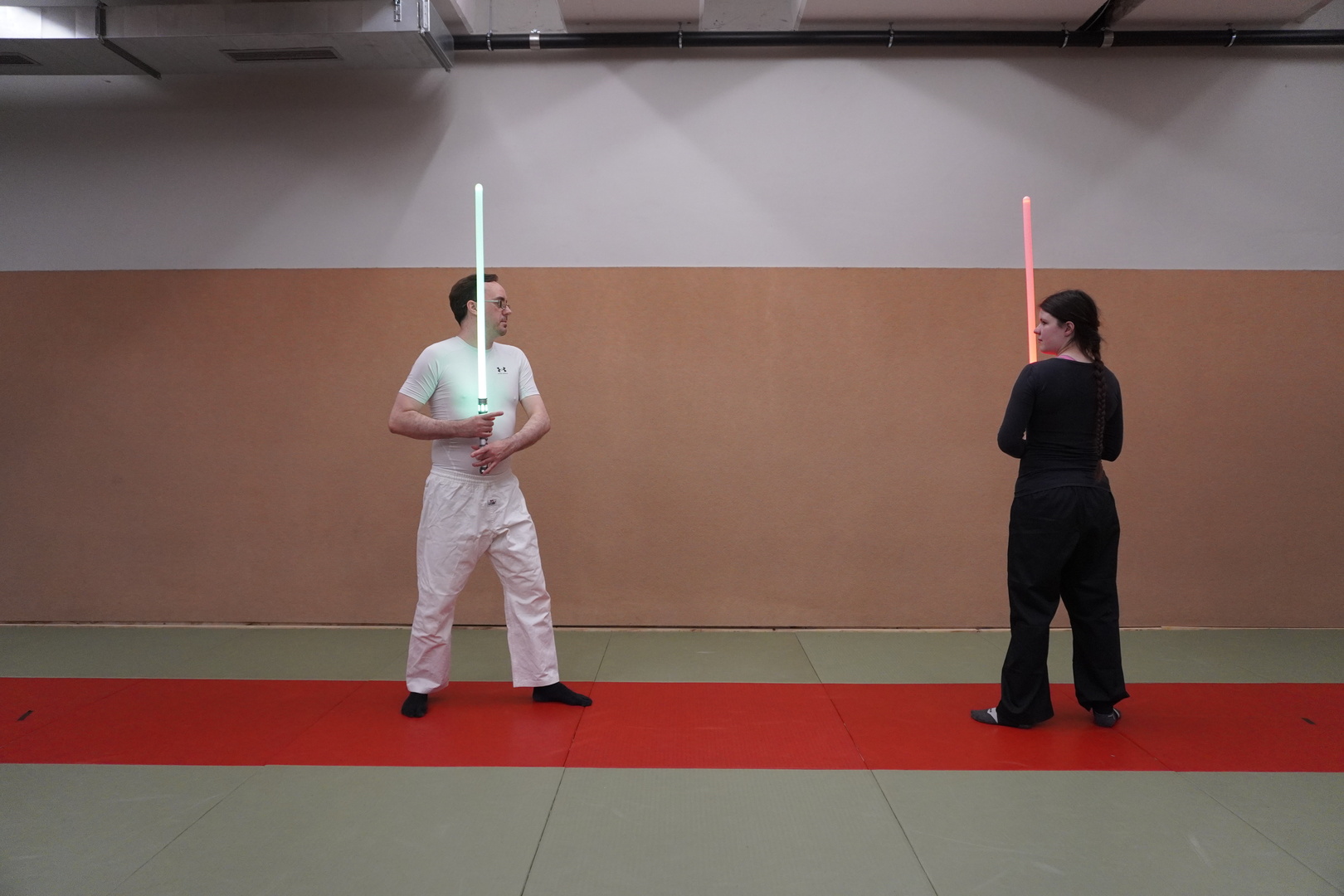
The upright guard is a more compact position. Hold your light sword upright in front of your body around stomach height. Step the dominant foot slightly back and turn it about 90 degrees outward.
Cuts
Cuts are your primary offensive techniques.
Side Cut
A side cut is a mostly horizontal strike to the head, torso, hips or knees. Start with both hands on the sword. Sweep the blade from the side toward the target. You can stop the cut at the target or continue through, then release the off-hand after the midpoint.
Downward Cut
If the sword is not already raised, bring it back in a looping motion and lift it above your head. From the apex, direct the blade toward your opponent and cut down. Use both hands for control and stop at roughly a 45-degree angle, with the blade close to the ground. Adjust the angle into a diagonal cut to make it harder to parry.
Upward Cut
If the sword is not already low, move it back and let it drop behind you. From there, bring it upward toward your opponent in a controlled motion. Use both hands for precision. Cuts from the off-hand side may feel awkward at first; train them until they become natural.
Parries
Parries redirect incoming attacks.
Side Parry
Use this against strikes above the hips from the side. Hold the sword upright, extend your arms, and meet the incoming cut at roughly a 90-degree angle. Guide the opposing blade away from your body.
High Parry
Use this against downward strikes from above. Hold the sword horizontally, extend your arms, and meet the attack at roughly a right angle. Keep control and deflect the force away.
Low Parry
Use this against strikes below the hips or upward attacks. Rotate the blade downward to meet the incoming cut and guide it away while maintaining a stable stance.
Basic Drill: 10 Cuts and Parries
This drill combines the basic techniques. Train it until you can perform it smoothly and safely.
- Attacker: Side cut to the head (right side, defender's left) Defender: Side parry
- Attacker: Side cut to the head (left side) Defender: Side parry
- Attacker: Side cut to the torso (right side) Defender: Side parry
- Attacker: Side cut to the torso (left side) Defender: Side parry
- Attacker: Side cut to the knee (right side) Defender: Low parry
- Attacker: Side cut to the knee (left side) Defender: Low parry
- Attacker: Downward cut from the left to the center of mass Defender: High parry
- Attacker: Downward cut from the right to the center of mass Defender: High parry
- Attacker: Upward cut from the left to the center of mass Defender: Low parry
- Attacker: Upward cut from the right to the center of mass Defender: Low parry
Train the sequence on both sides. The drill is cooperative: the attacker gives clear lines, the defender works cleanly and with control. Keep timing consistent and make sure every movement is deliberate. This develops coordination, timing, and control. Speed comes later.