Introduction
Martial Art or Stage Fighting
The light sword is a fictional weapon, but I want to teach it as if it were a real martial art with a centuries-old tradition. This manual offers a structured approach in which you learn to handle the light sword as if it were part of an actual martial discipline.
You will learn guards, cuts, footwork, drills, and principles the same way you would approach a traditional martial art: build control first, then speed, then expression. From there, you can develop your training in different directions, from controlled sparring to choreographed performance.
If your main goal is stage fighting, this manual gives you a martial foundation rather than just a collection of tricks. You can expand it with acting and movement training if you want to develop the performance side further.
Safety Considerations
Training with any type of stick carries a real risk of injury. Safety must be treated as an integral part of training.
Your training environment should be clear and large enough to allow free movement. Remove obstacles such as furniture, bottles or loose equipment.
When practicing sequences, start slowly and increase speed only when everyone involved can control their movement. Complex or unfamiliar techniques should be trained with foam first before switching to a light sword.
In free sparring, always use a foam baton. Ideally, it should match the length and handling of your light sword so the transition between tools feels natural. You are responsible for your partner's safety as much as your own.
Falls and rolls require special attention. Although experienced practitioners can perform them on hard surfaces, training without proper mats significantly increases injury risk and should be avoided.
Light swords are especially attractive to children. If you train with them, enforce safety rules consistently and keep equipment out of their reach.
Meditation
Effective training requires presence. Distraction reduces control and reduced control leads to mistakes and injury. Begin and end each session with a short period of meditation to create a clear boundary between training and daily life and to stabilize your focus.
To clear your mind, sit comfortably, close your eyes and breathe steadily. Bring your attention to your body and your breathing instead of trying to force your mind into silence. Thoughts will arise naturally; let them pass and return your focus to your breath whenever it drifts.
Training Equipment
You do not need expensive equipment to start training. Most techniques can be practiced safely with simple tools. You can buy training gear or use objects you already have. A wooden staff, a shortened broom handle or a simple stick with a marked grip can serve as effective substitutes.
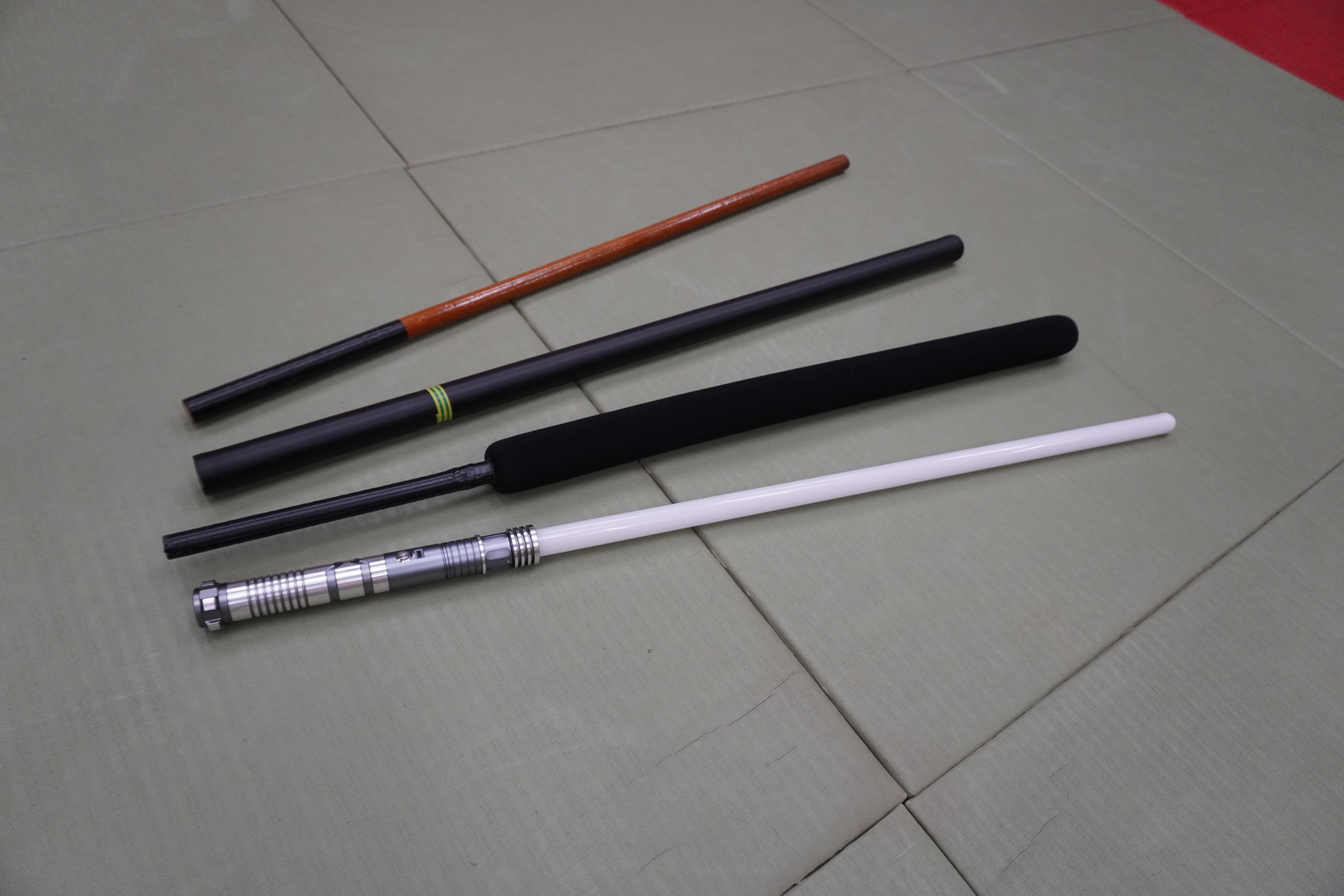
For partner drills and sparring, use a foam baton. It should roughly match the length and handling of a light sword while still being soft enough to absorb impact. You can buy one or build one yourself. I made mine from PVC pipe, foam pipe insulation, microfiber cloth, and electrical tape.
Commercial light swords vary greatly in durability. If you use one for training, make sure it is suitable for contact and not intended as a toy.
Start simple. Upgrade your equipment when your control and commitment justify it.
Legal and Practical Considerations
Training uses objects that look like weapons or may be treated as weapons. For example, a wooden stick can under some circumstances be considered an impact weapon. Other training tools may look like weapons to bystanders even if they are intended only for sport, play, training or performance.
That is why we handle them carefully and responsibly. Training should take place in suitable indoor spaces or on clearly enclosed private property where training is permitted. This makes it clear to everyone that this is controlled practice.
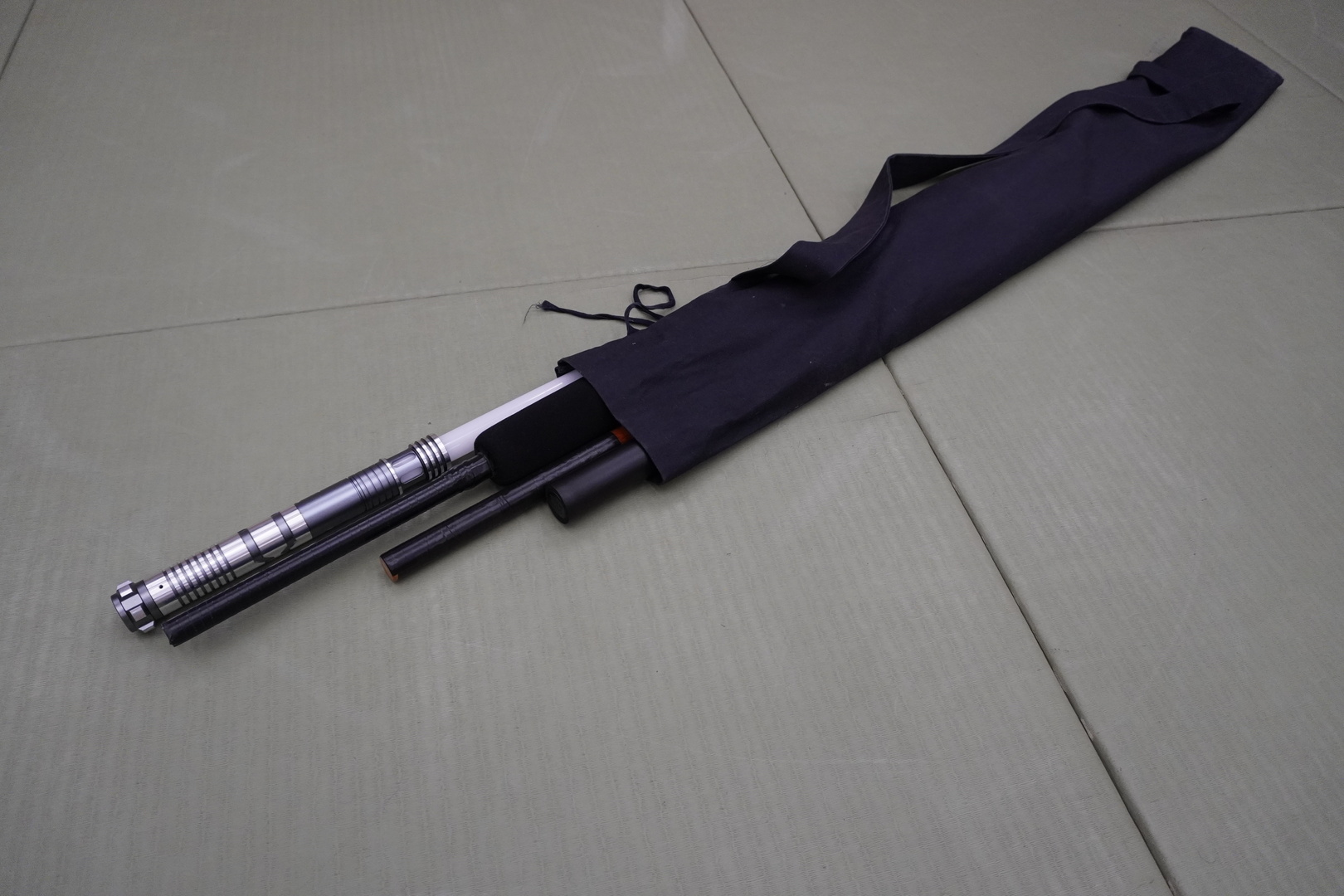
When traveling to training, transport equipment safely packed in a cloth bag, sports bag or weapon case. The key point is that the item should not be carried openly and should not be immediately accessible.