
Advanced Techniques
These techniques build on the basics. Learn the basic techniques first and apply them with control before training these, especially with a partner.
Rolling with Sword
You should be able to perform all falling and rolling movements while holding a light sword. Start without a blade, using only the hilt. Keep the sword close to your body during the roll. You can roll over a closed fist to keep the sword off the ground. You can also set the sword down, hold it only with your fingertips, and pick it up again as the movement ends.
Spins
Spins have no direct practical use. Use them sparingly to connect actions and create visual flow.
Basic Spin
The simplest spin traces an X shape in front of your body. Move the blade in a controlled figure-eight in front of you. Keep the motion tight and aligned so it protects your immediate space without becoming exaggerated.
Idle Spin
This spin extends the figure-eight around your body. Start from a forward spin. Let the blade travel past your side and behind your back. Guide it close to your body and allow the motion to carry it around rather than forcing it with your wrist. As the blade returns from behind, bring it back to the front in one continuous motion. Keep the movement compact. The spin comes from coordinated motion of arm, shoulder and body, not from the wrist alone.
High Guard
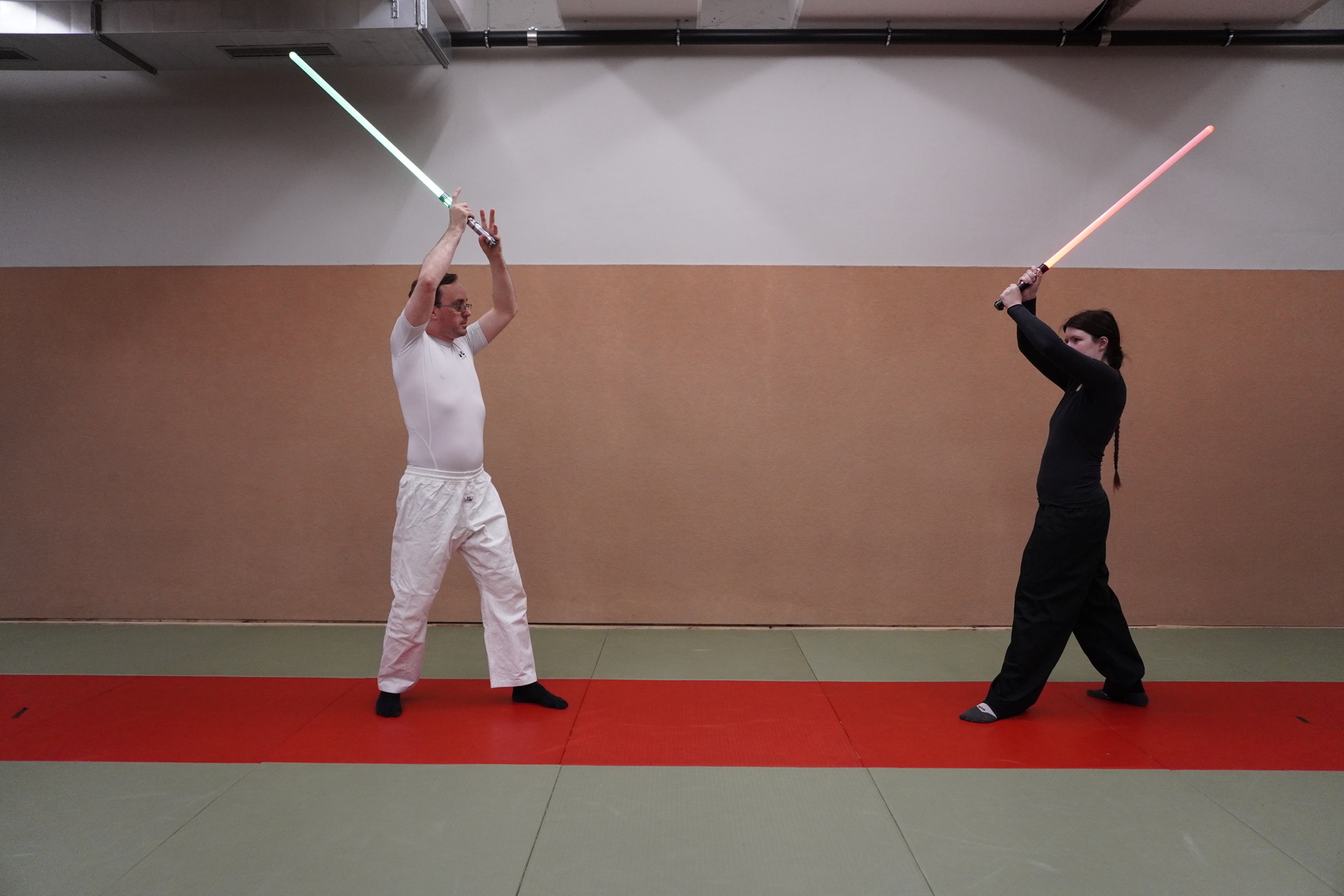
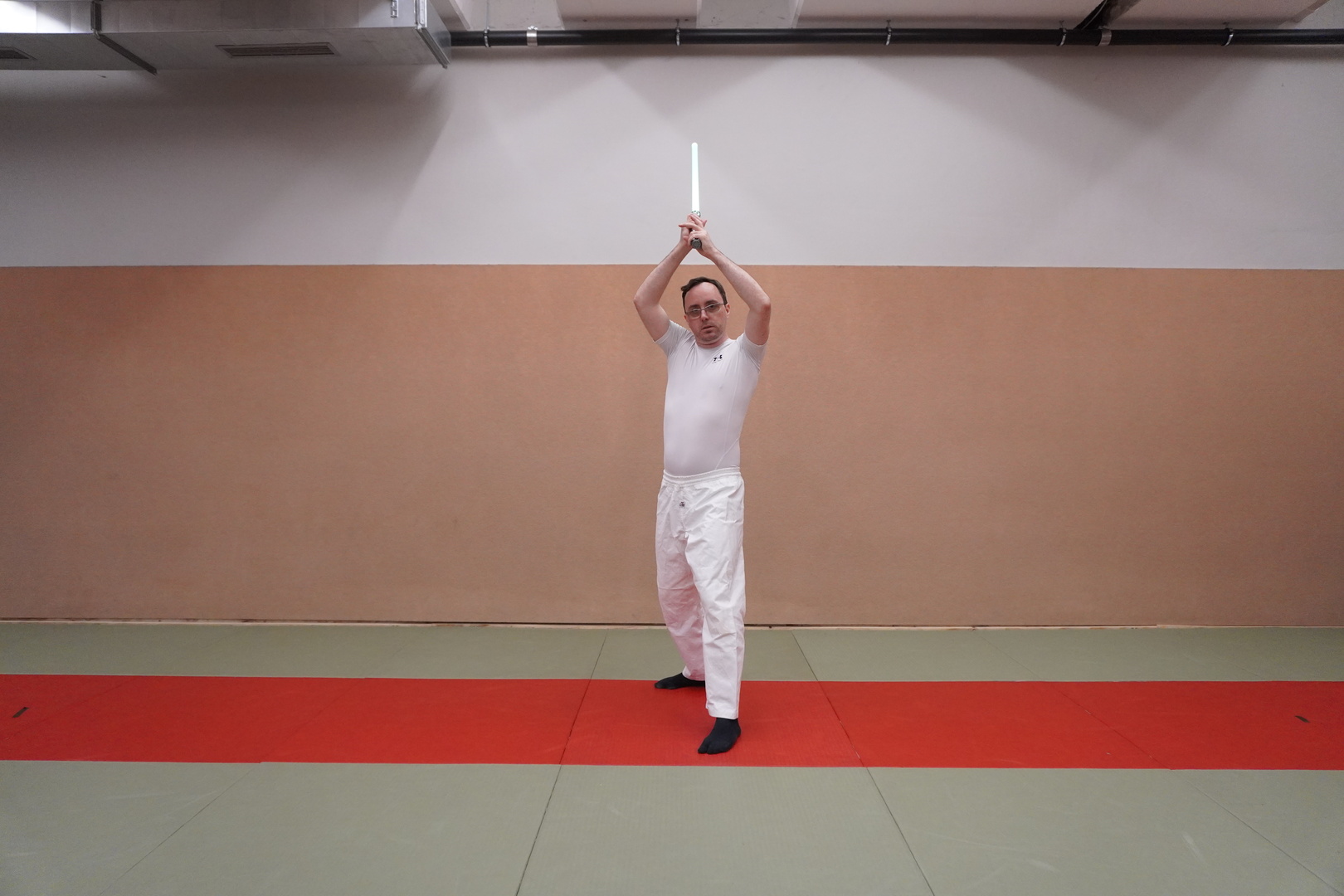
Raise your light sword above your head and hold it at roughly a 45-degree angle. Step back with the foot on the side of your dominant hand. Use this position to prepare downward cuts and to threaten from above.
Horizontal Guard
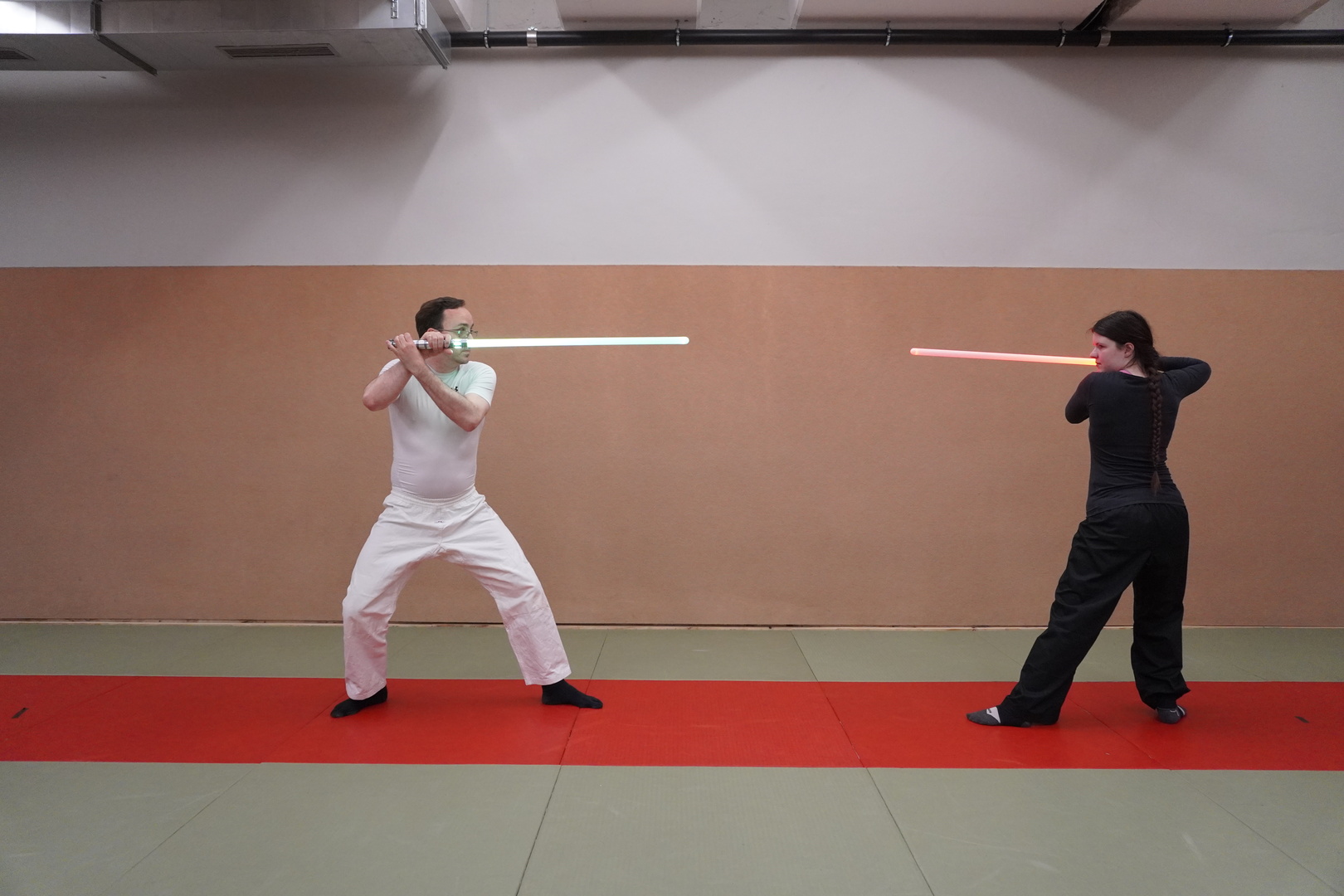
Raise the light sword to head level and hold it horizontally toward your opponent. Step back with the foot on the weapon side. Use this guard to control the line in front of you and intercept incoming attacks.
Back Guard
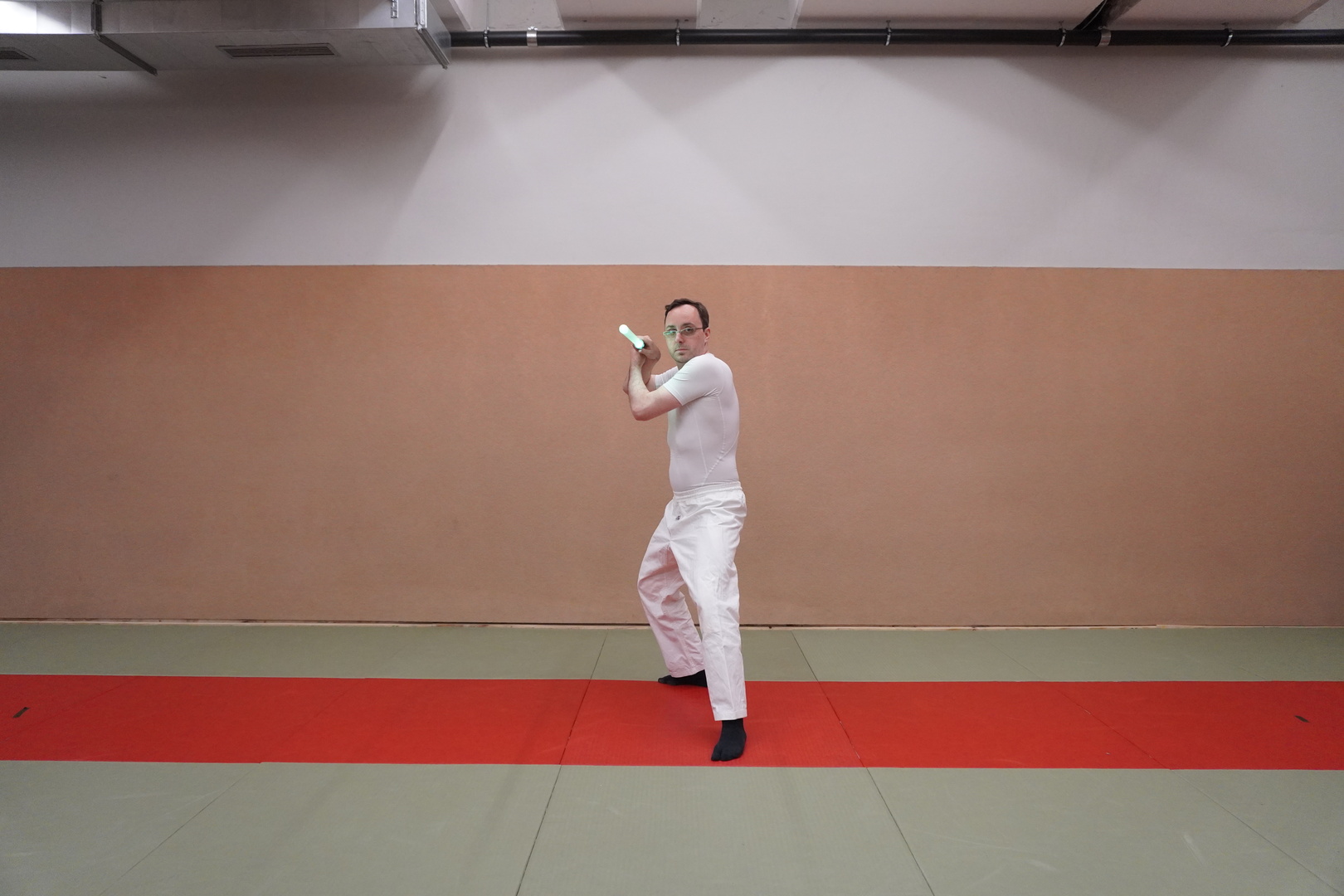
Hold the light sword behind you at roughly a 45-degree angle toward the ground. Step back with the foot on the weapon side. Use this position to prepare wide or deceptive attacks and to break the opponent’s expectation of your line.
Thrust
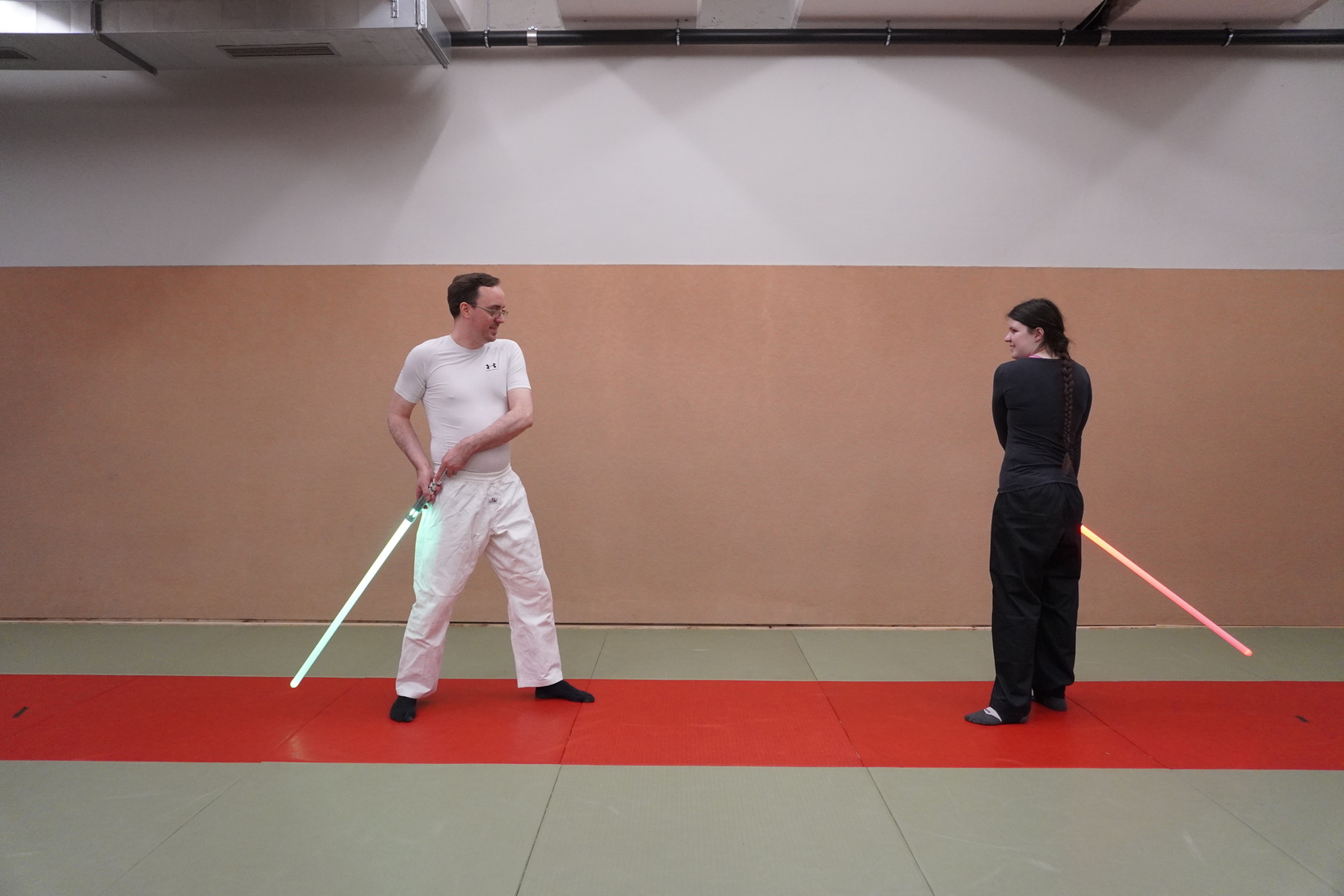
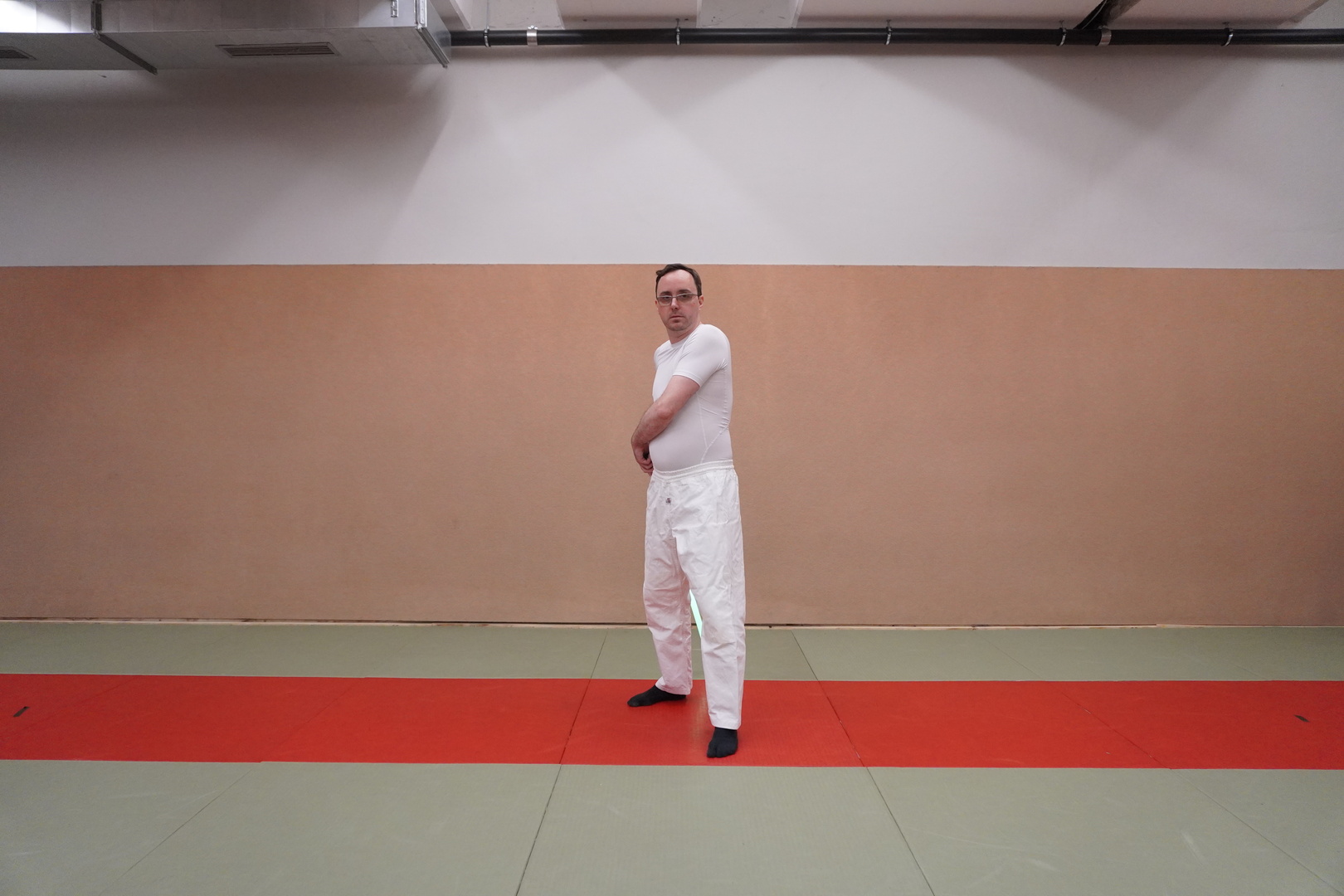
Use a thrust when the line is open. Extend the blade in a controlled motion toward your opponent. You can perform the thrust with a short extension or with a lunge to bridge the distance.
For stage fighting, thrust in a controlled line past your partner. From the audience’s perspective, the line should appear to hit without actually endangering your partner.
A Parry
Raise your hands and angle the blade down while stepping back with the opposite foot. Meet the incoming strike close to your hilt and guide it off your blade so the contact forms an A shape. Use this parry to catch and control the blade when you are late to react. Work with the contact rather than avoiding it.
V Parry
Use this against incoming strikes when you have time to react early. Angle the blade upward and meet the incoming cut in front of your body so the blades form a V shape. Keep your arms extended and guide the opposing blade away from your centerline. Do not catch the strike close to your body. Redirect it early and maintain distance.
sword Lock
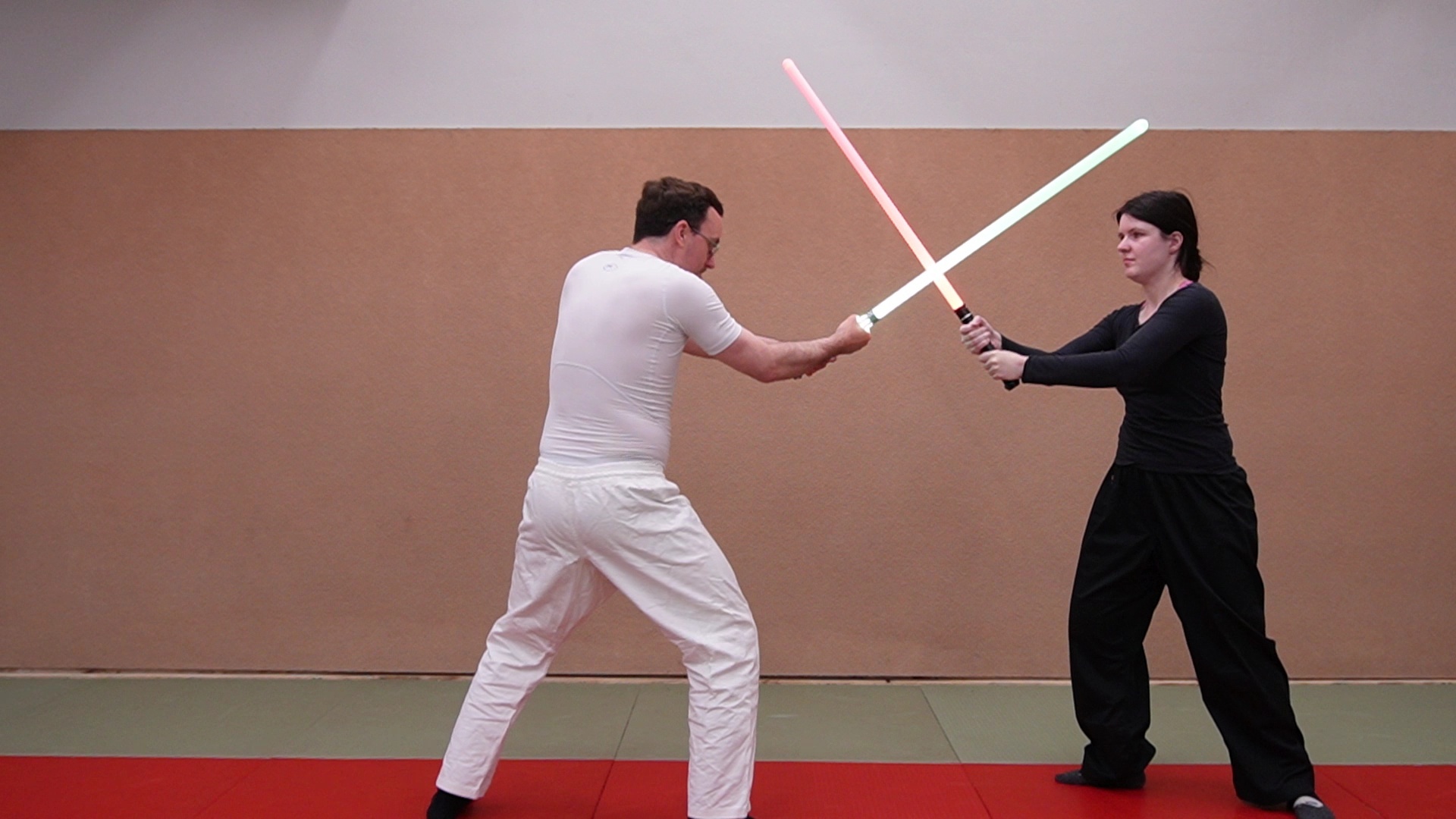
sword lock is when the magnetic fields of the blades get entangled. Make the moment visible. Do not disengage hastily. Hold contact briefly so the situation remains recognizable, then resolve it with a clear action.
Kicks, Punches, and Shoves
Having a light sword does not prevent you from using your body. Use simple actions to manage distance and control the exchange. A light push or controlled kick to the center of the body can be used to create space and reset distance.
In a sword lock, you are close enough to use elbows, light strikes or body pressure. Use these actions in a controlled way to break contact and create an opening.
Start slow and stay in control. Build speed only after you can move safely, including falls and rolls.